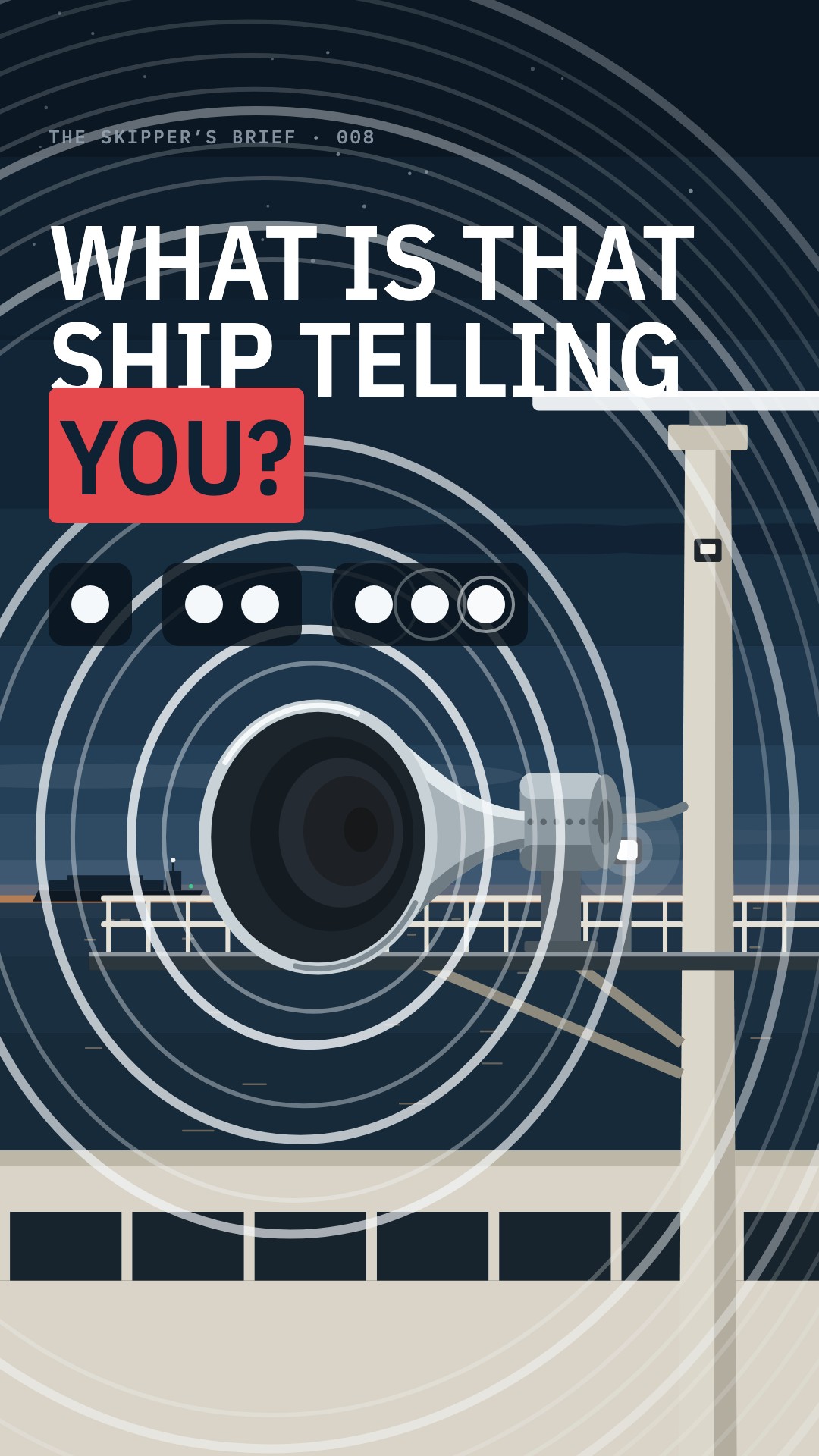
Brief #008 · SOUND SIGNALS
One, two or three blasts: what is that ship telling you?
Rules of the road
When ships are in sight of each other, a ship under power announces its moves on the whistle: one short blast for a turn to starboard, two for port, three for engines astern, one long blast at a blind bend, and five or more short, rapid blasts when it doesn't understand what you're doing or doubts you're doing enough to avoid a collision.
International COLREGs, power-driven vessels in sight of one another. Under US Inland Rules one and two blasts announce an intended passing and are answered; local rules can differ.
Transcript
One, two or three blasts: what is that ship telling you?
Ships in sight of each other talk with their horns.
One short blast, about a second: I'm turning to starboard.
Two: I'm turning to port.
Three: my engines are going astern.
One long blast, four to six seconds? It's nearing a blind bend.
But the one to know: five or more short, rapid blasts.
It means: I don't understand what you're doing, or I doubt you're doing enough to avoid a collision.
Hear five aimed at you? That ship is worried about you. Make your move early, and make it big.
Want to learn more interesting facts like this? Follow the page.
Sources
- COLREGs Rule 34, Manoeuvring and warning signals (International text): when vessels are in sight of one another, a power-driven vessel underway indicates a manoeuvre on her whistle: one short blast 'I am altering my course to starboard', two short blasts 'I am altering my course to port', three short blasts 'I am operating astern propulsion'; (d) a vessel that fails to understand the intentions or actions of the other, or is in doubt whether sufficient action is being taken by the other to avoid collision, gives 'at least five short and rapid blasts'; (e) a vessel nearing a bend where other vessels may be obscured sounds one prolonged blast (USCG Navigation Rules)
- COLREGs Rule 32, Definitions: a short blast is 'a blast of about one second's duration'; a prolonged blast is 'a blast of from four to six seconds' duration' (USCG Navigation Rules)
- US Inland Navigation Rules, Rule 34(a): power-driven vessels meeting or crossing within half a mile signal 'I intend to leave you on my port side' (one short blast) or 'on my starboard side' (two), and the other vessel, if in agreement, sounds the same signal (USCG Navigation Rules; for the scope note)
- COLREGs Rule 8, Action to avoid collision: positive and made in ample time; any alteration of course or speed 'large enough to be readily apparent to another vessel observing visually or by radar'; a succession of small alterations should be avoided (USCG Navigation Rules)
- COLREGs Rule 16, Action by give-way vessel: 'early and substantial action to keep well clear' (USCG Navigation Rules)
- Marine and Safety Tasmania, Navigation rules: sound signals for vessels in sight of one another (1 short blast: altering course to starboard; 2: to port; 3: operating engines astern; 5 or more: unsure of your intentions and doubt whether you are taking sufficient action to avoid collision); 'make your movements clear and deliberate so that other masters can see your intentions'