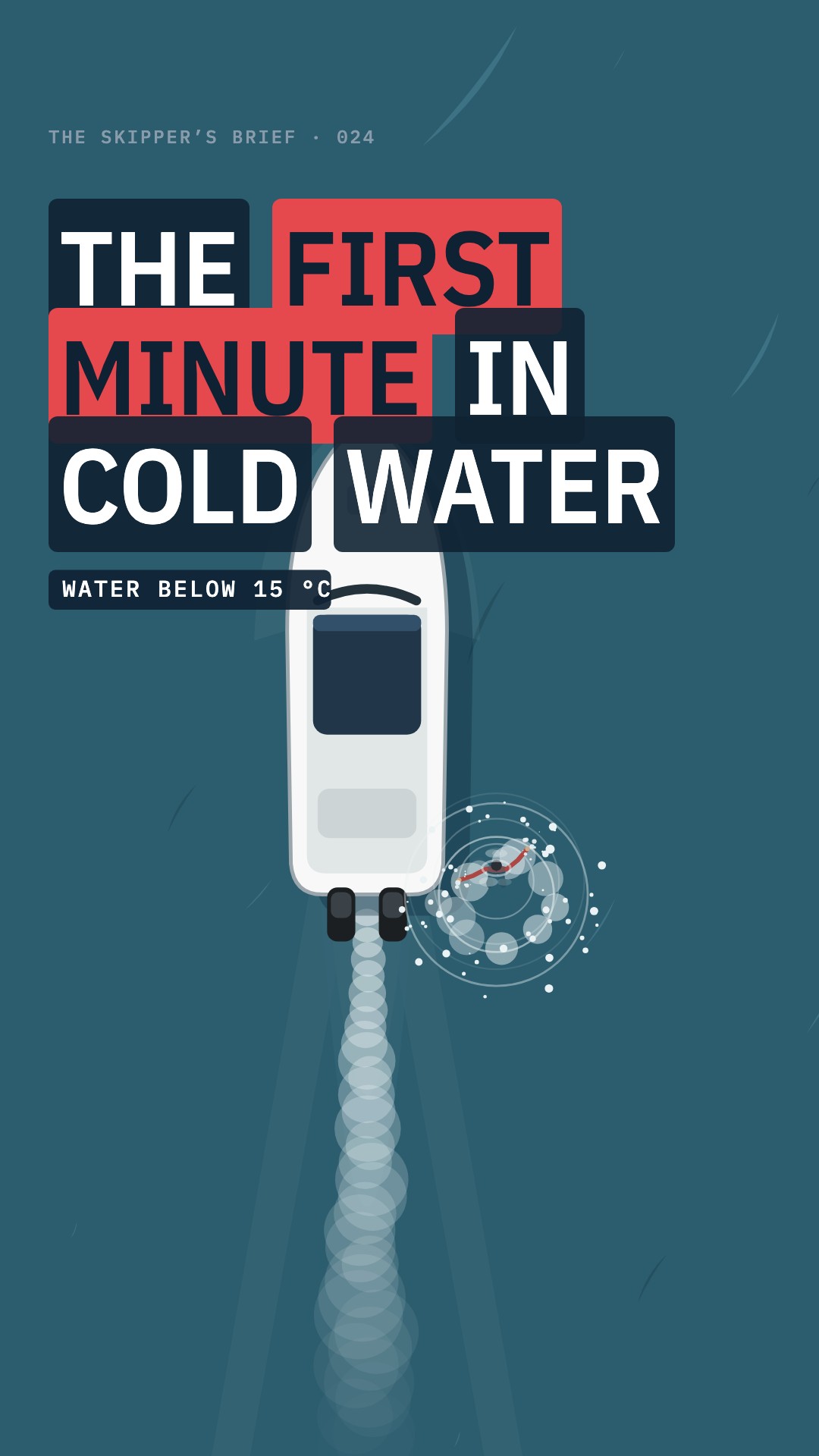
Brief #024 · COLD WATER
Fall into cold water? Float first
Safety
Below 15°C, cold water shock makes you gasp and your breathing race, so the first minute is the most dangerous. Float on your back for 60 to 90 seconds until your breathing settles, then call for help or swim to safety. After that, the 1-10-1 rule: about 10 minutes of useful movement, about an hour to hypothermia. A life jacket keeps you up through all of it.
Transcript
In water below 15°C, the first minute is the most dangerous. Not because of hypothermia.
The cold makes you gasp, and your breathing races out of control. Gasp underwater, and you breathe in the sea.
Your instinct says swim hard. Don't. Float. Lean back, arms and legs out wide, like a star.
Give it 60 to 90 seconds, until your breathing settles. Then call for help, or swim to safety.
After that, in about 10 minutes, your arms and legs stop working. Hypothermia takes about an hour to knock you out.
A life jacket keeps you up through all of it. In the US in 2024, 87% of boaters who drowned weren't wearing one.
So wear one. And if you fall in, float first. Want to learn more interesting facts like this? Follow the page.
Sources
- Met Office, Cold water shock: what it is and how to stay safe (2025): below 15°C, involuntary gasp, breathing and heart rate up, about 90 seconds; lean back, extend arms and legs; then call for help or swim to safety (RNLI)
- RYA, Cold water shock: a real danger below 15°C; UK and Irish seas average 12°C, a risk even in summer; float for 60 to 90 seconds (RNLI advice); lethal in minutes, unlike hypothermia; lifejackets
- University of Portsmouth (Prof Mike Tipton), Float to live: a star shape, head back; cold shock passes within 60 to 90 seconds; UK and Irish waters average 12°C
- University of Portsmouth, Fight your instincts, not the water: gasping, thrashing and swimming hard is potentially a killer; then swim to safety, call for help or keep floating
- National Center for Cold Water Safety, Cold Shock: the gasp, out-of-control breathing; a gasp underwater means drowning
- Canadian Safe Boating Council, The 1-10-1 Principle (Giesbrecht): 1 minute cold shock, about 10 minutes of meaningful movement, about 1 hour to unconsciousness from hypothermia; lifejackets
- US Coast Guard, 2024 Recreational Boating Statistics: 76% of deaths were drownings; where PFD use was known, 87% were not wearing one